
The Speyside region. A region not really designated by natural boundaries, or clan ownership claims, but roughly defined by having access to the water coming from or flowing into the river Spey. Home to roughly 50 distilleries in the mid-east of the Highlands between Inverness and Aberdeen, hugging the North Sea coast. In the triangle Keith – Dufftown – Elgin alone, you’ll find many of the well-known single malts, and yet, shy north of the village of Rothes, there is one which has often fallen off our radar, until today.
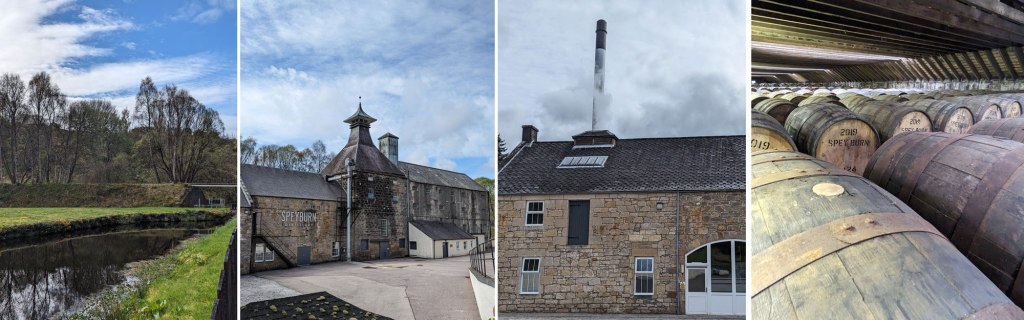
Fashionably early, we arrived at the Speyburn distillery and had a chat with a couple of American whisky tourists who had beaten us to getting there on time – not that there was any competition. We snap a couple of shots of what we think is the Granty Burn – a side arm (of a side arm) of the river Spey, before announcing ourselves in the small shop, where we are picked up by our host Sandy, a veteran at the distillery for 32 years.
Commissioned by the Hopkin brothers, designed by the renowned local architect Charles Doig – the inventor of the iconic Pagodas often marking the presence of a distillery, the distillery saw its first spirit flowing of the stills on Christmas day in 1897.
At the far end of the plot, close to the burn, the original drum maltings from that Christmas day are still in place inside a three story building. A storage floor, still displaying the original Porteus wooden dresser on top, three large steeps one level below and six massive drums to malt barley on the ground floor, looking as fit as if they would be operational after a little cleaning.
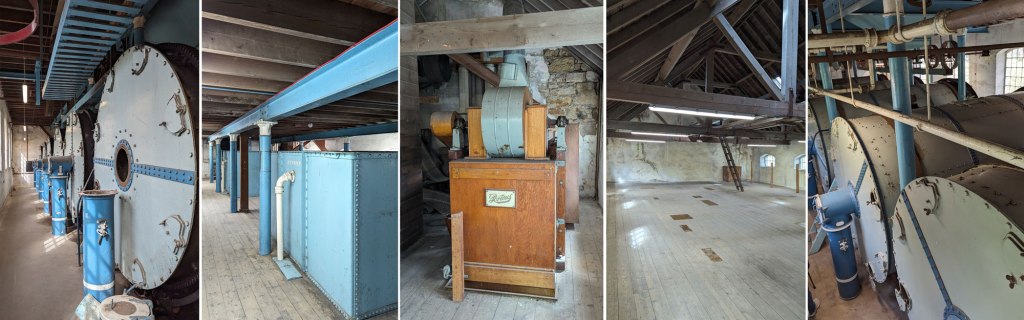
Their use was however stopped in 1967 and ever since, the distillery has operated with pre-malted barley from commercial maltsters, as is common throughout the industry except for a handful of exceptions. A rare find indeed, with huge historic value and a sight for sore eyes for whisky enthusiasts like ourselves. The connected next-door building holds a 90-year old Boby mill, which can not be the original mill. Have we stumbled upon rare evidence of a Porteus mill failing after “only” 35 years of service and getting replaced by a Boby mill? Who knows. The current mill still operates daily, grinding away – according to Sandy, several elephants* worth of malted barley per batch.
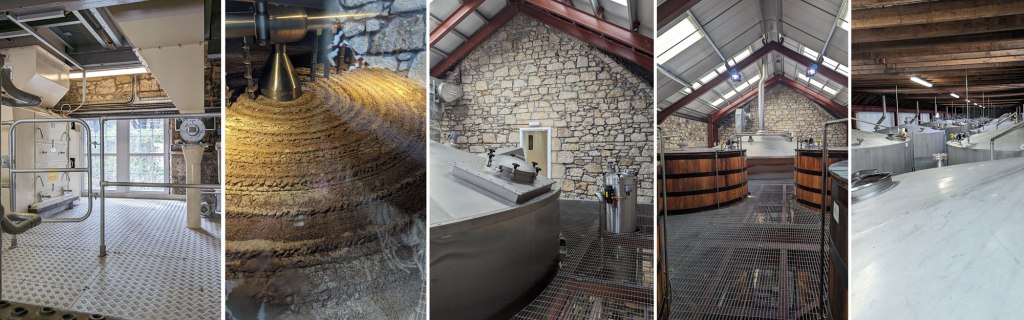
A stainless semi lauter mash tun churns the batch of 6,15 tons of ground malted barley and about 28.000 litres of water into a sweet wort, which is fermented in one of 4 wooden or 15 stainless steel washbacks for at least 72 hours. The takeover by Inver House in 1992 eventually resulted in an expansion and doubling of capacity in 2014, where the 15 added stainless steel washbacks allow for the longer fermentation times today.
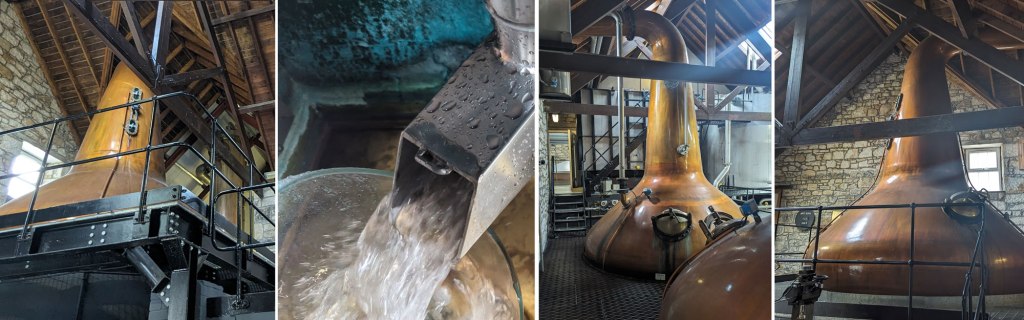
After fermentation, one huge, externally heated wash still runs one whole washback through a shell and tube condenser after which the low wines are split into two rather small spirit stills, each running the heads, the 2,5 hours worth of heart cut at 60,9%, and the tails through their own worm tubs outside. With 4-5 tankers of spirit per week driven away to the central belt of Scotland for maturation off-site, the distillery is a serious player with about 4,2 million litres of spirit per year.
We purchased a distillery-exclusive bottling and, back in the Netherlands, wondered why we had only taken one. Speyburn has become a loud blip on our radar and, if we have anything to say about it, has become one of the hidden gems of Speyside.
* An elephant is a totally legit technical term, averaging somewhere between 1,8 and 6,3 tons, depending if you measure in African or Asian elephants and cows or bulls, which makes it completely clear how much we are talking about here.
Cheers,
Thomas & Ansgar
 WhiskySpeller